




Harr Chrysler Jeep Dodge Ram
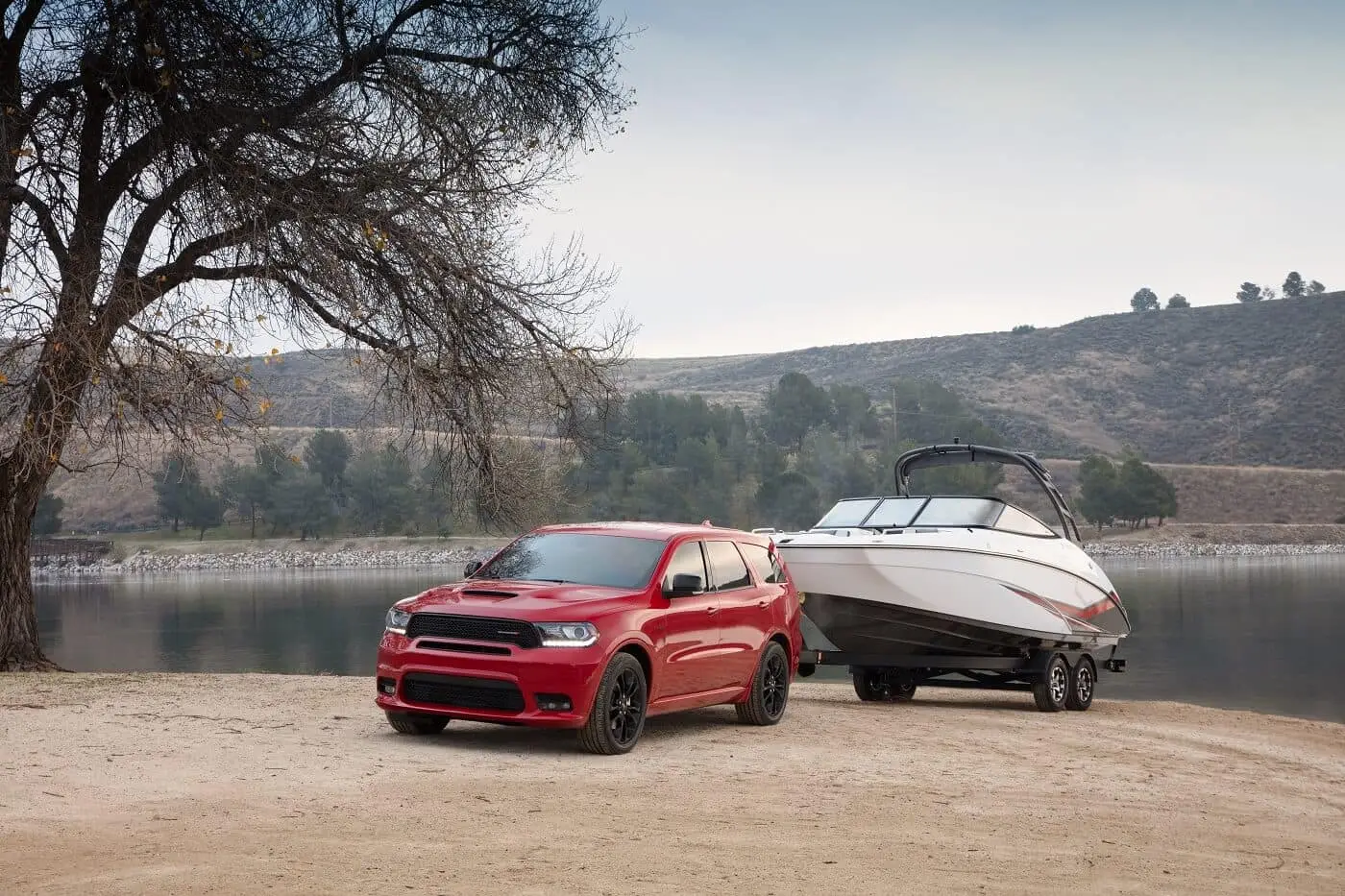
Many drivers look for a blend of power, capability, and family-friendly features when choosing between the 2025 Dodge Durango and the 2025 Ford Explorer. If you're deciding which SUV would be better for you, check out this comparison from Harr Chrysler Dodge Jeep Ram, serving drivers in Worcester, Auburn, and Shrewsbury, MA!
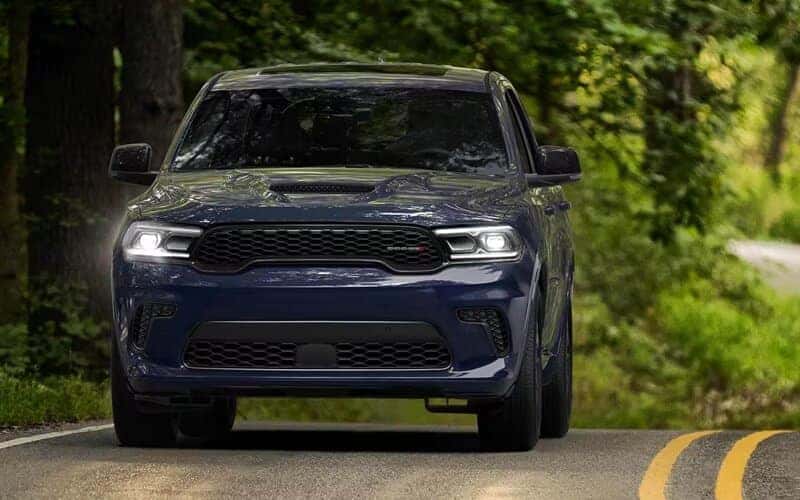
The Dodge Durango offers engine choices that overshadow the Explorer's lineup. Durango is the only vehicle in its class with an available V8 engine. The most extreme example is Durango's supercharged 6.2L HEMI® V8 in the SRT® Hellcat models: it produces an astounding 710 horsepower and 645 lb-ft of torque*.
Even Durango's everyday engines are strong. The standard 3.6L Pentastar® V6 makes 295 horsepower and 260 lb-ft, with a V6 towing capacity of 6,200 lbs., while the midrange 5.7L HEMI® V8 (in R/T models) produces 360 horsepower and 390 lb-ft.
By comparison, the Explorer's lineup tops out at a 3.0L twin-turbo V6 with about 400 horsepower and 415 lb-ft of torque, and its base 2.3L EcoBoost® 4-cylinder produces about 300 horsepower*.
Both the Durango and Explorer seat up to seven and have three rows, but their cabins feel different. Dodge designed the Durango interior to be muscular yet practical. It offers up to 85.1 cubic feet of cargo space behind the front seats, nearly matching the Explorer's quoted 85.3 cubic feet.
The Durango also boasts over 50 seating configurations, thanks to power-folding second and third-row seats. Available second-row captain's chairs make reaching the third row easier and give the interior a sportier vibe.
The Durango's styling cues are performance-inspired – available carbon-fiber trim, billet-aluminum pedals, and a driver-centric dash – but it remains family-friendly. It can be equipped with a Harman Kardon® premium audio system with 19 speakers for theater-quality sound.
By contrast, the Explorer's available audio (a Bang & Olufsen system) offers a great listening experience but has only 14 speakers. Both SUVs can be fitted with leather upholstery, heated/ventilated front seats, and multi-zone climate control.
Both SUVs come loaded with modern tech, but each brand has its own style. The Durango features the Uconnect® 5 system, with a sharp 10.1-inch touchscreen. Uconnect® ® offers wireless Apple CarPlay® and Android Auto™, built-in navigation, and even lets up to five drivers save individual profiles with their own settings. Ford's Explorer uses the SYNC® 4 infotainment with Ford Digital Experience.
In-vehicle convenience and safety tech differ by model. The Explorer offers Ford BlueCruise for hands-free highway driving. On the other hand, the Durango comes with standard driver-assisted technologies like lane-departure warning with LaneSense® Lane Keep Assist and available adaptive cruise control with stop-start.
The Durango also offers performance-minded features, such as available paddle shifters for manual gear changes.
The Durango's muscle-SUV heritage means it has a firm, sporty ride. Most models are rear-wheel-drive by default (with available all-wheel drive), giving it a well-balanced feel and strong towing dynamics. High-performance Durango versions (SRT and Hellcat) add Brembo brakes and performance-tuned suspension, enhancing driving confidence.
The Explorer, designed for comfort and versatility, uses an independent rear suspension and multiple drive modes such as Normal, Eco, Sport, Tow/Haul, Slippery, and Off-Road. This setup is great for mixed driving conditions, but the Durango's straightforward, powerful engineering means it never feels sluggish, even when fully loaded.
Regarding the Dodge Durango vs Ford Explorer, the choice often comes down to priorities. If raw power, towing muscle, and a bold personality are at the top of your list, the Durango leads by a wide margin.
So, do you want to drive a Durango? Visit Harr Chrysler Dodge Jeep Ram today and take a test drive in Worcester, Auburn, and Shrewsbury, MA.
*Source: Dodge
*Source: Ford


